Wednesday, August 24, 2011


  • Kingfisher (Halcyonidae)


    There are about 90 species of kingfisher. All have large heads, long, sharp, pointed bills, short legs, and stubby tails. They are found throughout the world.


  • Green Wing Macaw Parrot (Ara chloroptera)


    The superficially similar Scarlet Macaw has no eye lines and a yellow bar on each wing. Some macaw owners and experts call the Green-winged Macaw the “gentle giant”, as it is larger in size than the Scarlet Macaw and Blue-and-yellow Macaw, but have a more docile, sweet nature which often makes it a more desirable pet or companion parrot.


  • Troupial (Icterus icterus)


    Troupial or trupial is the national bird of Venezuela. The Troupial is fairly large in size, with a long tail and a bulky bill. It has a black head and upper breast. Troupials are obligate nest pirates, meaning they make no nest of their own, and are thus required to steal or occupy a vacant nest in order to survive. Troupials are capable of violent attacks against native nesters, and once they possess these territories they defend them fiercely against intruders. They may even ingest the eggs or young hatchlings of a newly acquired nest.

  • Blue Throated Bee-Eater (Merops viridis)


    The bee-eaters are a group of near passerine birds in the family Meropidae. They are characterized by richly colored plumage, slender bodies and usually elongated central tail feathers. It is a species of bird in the Meropidae family. It is found in Hong Kong, Taiwan, China and countries in Southeast Asia.


  • Painted Bunting (Passerina ciris)

    The male Painted Bunting is often described as the most beautiful bird in North America. Its beautiful colors, dark blue head, green back, red rump and underparts, make it easy to identify.


  • Keel-billed Toucans (Ramphastos sulfuratus)


    This bird is the national bird of Belize. Toucans belong to family Ramphastidae
    They are brightly marked and have large, colorful bills. It is also known as Sulfur-breasted Toucan, Rainbow-billed Toucan, and colloquially “the bill bird” (though this might refer to any toucan). It is a colorful South American bird with a large bill.


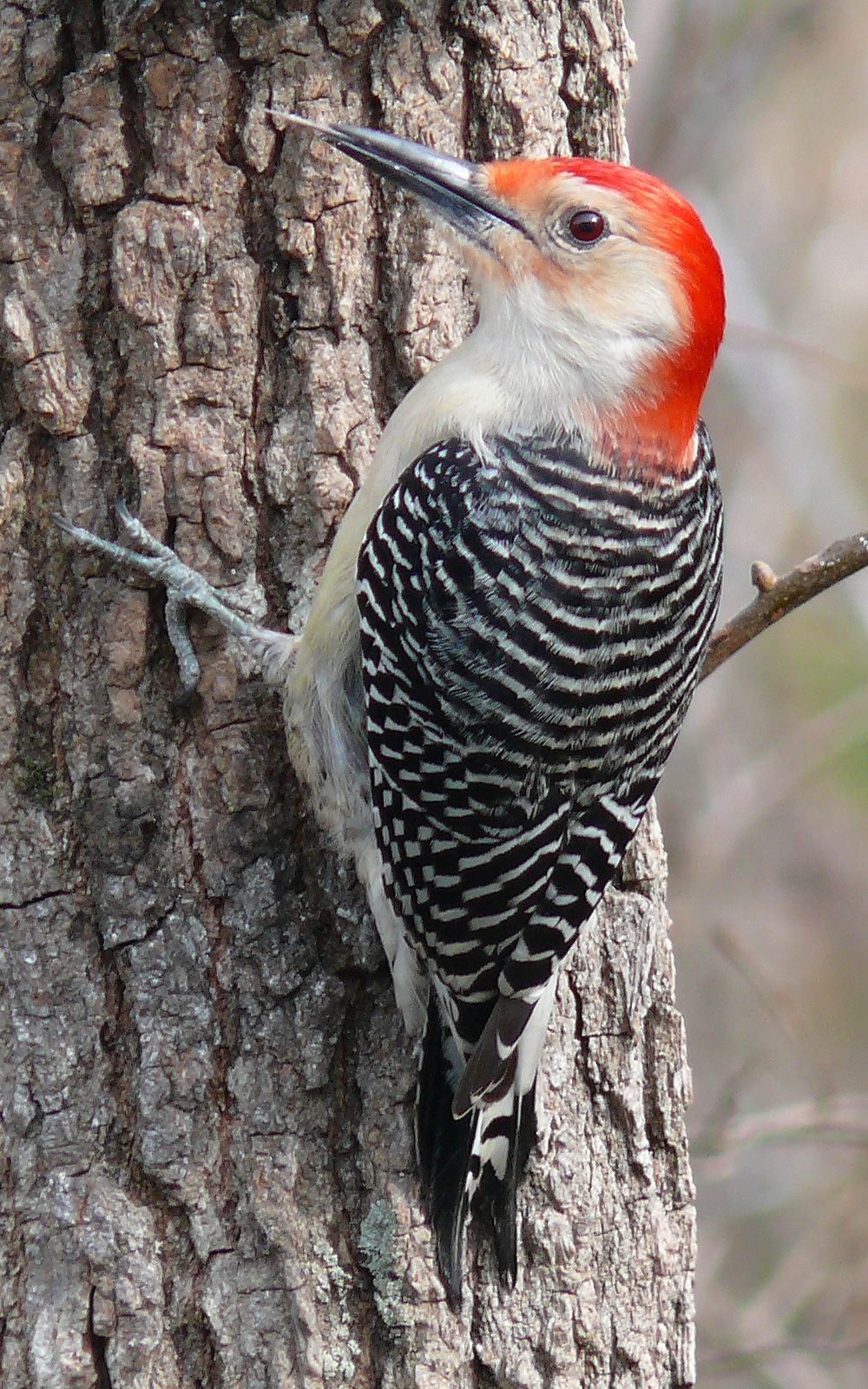
  • Male


    Wood Duck (Aix sponsa)

    The Wood Duck or Carolina Duck is a medium-sized perching duck. A typical adult is about 19 inches in length with an average wingspan of 29 inches. The adult male has distinctive multi-colored iridescent plumage and red eyes. The female, less colorful, has a white eye-ring and a whitish throat.

    Tuesday, August 23, 2011

    Golden Pheasant (Chrysolophus pictus)

    The golden pheasant of Asia is a brilliantly colored game bird. It is native to forests in mountainous areas of western China but feral populations have been established in the United Kingdom and elsewhere.

    Birds of Paradise (Paradisaeidae)

    The greater bird of paradise found in New Guinea has elongated flank feathers that form ornamental plumes. Bird of Paradise is a tropical bird known for the brilliant plumage of the male. They live mostly in New Guinea and neighboring islands. The brilliantly colored feathers of the male were once widely sought as decorations for women’s hat.

    Hyacinth Macaw (Anodorhynchus hyacinthinus)

    Hyacinth Macaws are native to central and eastern South America. It is the largest macaw and the largest flying parrot species in the world, though the flightless Kakapo of New Zealand can outweigh it at up to 3.5kg. In terms of length it is larger than any other species of parrot. Their popularity as pets has taken a heavy toll on their population in the wild. Birds in captivity fetch a price of around $9,000-$12,000 US.   

    Flamingo (Phoenicopteridae)

    Flamingos are found in both the Western Hemisphere and Eastern Hemisphere. Flamingos frequently stand on one leg. The reason for this behavior is not fully known. Flamingo tongues were considered a delicacy in Ancient Rome. Also, Andean miners have killed flamingos for their fat, believed to be a cure for tuberculosis .

    Scarlet Tanager (Piranga olivacea)

    The scarlet tanager is a medium-sized American songbird. Adult males are bright red with black wings and tail; females are yellowish on the underpants and olive on top, with olive-brown wings and tail.

    Mountain Bluebird (Sialia currucoides)

    The bluebirds are medium-sized, mostly insectivorous or omnivorous birds in the genus Sialia of the thrush family Turdidae. These are attractive birds with blue, or blue and red, plumage. Female birds are less brightly colored than males. 


    Female
    Male
    The male has a spectacular reddish crest, dark, blue-green plumage and a bright red circle around the eye, lower beak and legs.  The female plumage is green with reddish wings and head.  Crested partridges live in flocks of five to 15 and spend most of their time scratching on the forest floor for food.  The nest is a simple depression in dry leaves where five to six eggs are laid.

    CONSERVATION
    They are listed as “Near Threatened” in the wild by the IUCN because of over logging and habitat destruction. They are quite common in captivity and the Tennessee Aquarium maintains a breeding flock of two males and three females in the Butterfly Garden in Ocean Journey.
    Emerald Swallowtail (Papilio palinurus)
    Southeast Asia
    One of our most beautiful butterflies, the Emerald Swallowtail has shining green bands and flecks that look like glitter. It tends to fly high, so you’ll have to look up to see one resting on a leaf or visiting a flower. For a closer look, come watch us release them! 
    Zebra Mosaic (Colobura dirce)
    Central & South America
    This little fruit-eating butterfly sits head down on tree trunks when it rests. The pattern on the wings confuses predators so they can’t tell which end is head or tail. The predator goes for the “head” facing up – and ends up with only a piece of wing as the butterfly takes off!
     Postman (Heliconius erato or H. melpomene)
    Central & South America
    Brightly colored and active, this is the butterfly you’ll see the most. Not all individuals look the same, though, and there are many other patterns besides the one shown here. Their ability to digest nutritious pollen lets them live far longer than most butterflies, up to 9 months. Most butterflies only live for a few weeks.
    Dead Leaf (Kallima paralekta)
    Southeast Asia
    One of the most amazing examples of animal camouflage, this butterfly even has “leaf vein” markings and a stem-like “tail” in back. When it spreads its wings, it reveals gorgeous shining blue with orange markings. This butterfly is a fruit feeder.


    Saturday, August 20, 2011

    The finger monkey is the tiniest living primate in the world. It’s so small that it can hold on to your finger. This cute little primate hugs and grips on to your finger so tight that it pulls your heartstrings and you wish you could take it home with you. Finger monkeys are, as a matter of fact, pygmy marmosets. They are also known by the names ‘pocket monkey’ and ‘tiny lion’. These primates belong to the family Callitrichidae, species Cebuella and genus C. pygmaea. They are native to rain-forests of Brazil, Peru, Bolivia, Ecuador and Colombia.

    Sunday, September 5, 2010

    Socotra Island


    Socotra or Soqotra is a small archipelago of four islands and islets in the Indian Ocean off the coast of the Horn of Africa some 190 nautical miles (220 mi; 350 km) south of the Arabian peninsula, belonging to the Republic of Yemen. It has long been a part of the 'Adan Governorate, but in 2004 it became attached to the Hadhramaut Governorate, which is much closer to the island than 'Adan (although the closest governorate would be Al Mahrah).
    The name of the island is believed to come from Sanskrit 'dvipa sakhadara', which can be translated with 'Island of Bliss'. 
    THE ROOF OF ARABIA: One of the oldest inhabited regions worldwide transports visitors back into the world of thousand and one nights. Close to nature and unspoiled natural beauty, Yemen this age-old center of civilization preserves a way of life that has hardly changed since the middle ages.
    Geography and climate Socotra is one of the most isolated landforms on Earth of continental origin (i.e., not of volcanic origin). The archipelago was once part of the supercontinent of Gondwana and detached during the Middle Pliocene (ca 6 million years ago), in the same set of rifting events that opened the Gulf of Aden to its northwest.
    The archipelago consists of the main island of Socotra (3,625 km² or 1,400 sq mi), the three smaller islands of Abd al Kuri, Samhah, and Darsa, and small rock outcrops like Ka’l Fir’awn and Sabuniyah that are uninhabitable by humans but important for birds.
    The main island has three geographical terrains: the narrow coastal plains, a limestone plateau permeated with karstic caves, and the Haghier Mountains. The mountains rise to 5,000 feet (1,525 m). The island is a little over 80 miles (130 km) long east to west and typically 18-22 miles (30-35 km) north to south.
    The climate is generally tropical desert, with rainfall being light, seasonal (winter) and more abundant at the higher ground in the interior than along the coastal lowlands. The monsoon season brings strong winds and high seas.

    Shield bugs nymph pycanum rubens


    Friday, September 3, 2010

    The Most Colourful River In The World

    The river shown in the photographs is the Caño Cristales, which is located near the town of La Macarena in Columbia, South America. The river, world famous for its colourful display, has been called "the river that ran away to paradise", "the most beautiful river in the world" and "the river of five colours".

    During Colombia's wet season, the water flows fast and deep, obscuring the bottom of the river and denying the mosses and algae that call the river home the sun that they need. And during the dry season there is not enough water to support the dazzling array of life in the river. But during a brief span between the wet and dry seasons, when the water level is just right, the many varieties of algae and moss bloom in a dazzling display of colors. Blotches of amarillo, blue, green, black, and red - and a thousand shades in between - coat the river.
    The part of the river where the colourful blooms occur is quite isolated and is not accessible by road. Adventurous tourists can now fly into La Macarena and then make their way to to the river site on foot as part of guided tours. The site was effectively closed to tourists for several years because of guerrilla activity in the region along with concerns about the impact of unregulated tourist traffic. However, the site was reopened to visitors in 2009.